Leadership
A ruler who took charge of a state in the aftermath of successive family bereavements, and held it for close to three decades through a turbulent period in Indian politics.
She inherited a state in mourning and governed it for close to three decades from a small town on the Narmada — hearing petitions herself, building wells and rest-houses for people she would never meet, and leaving stone standing in places from the Himalaya to the southern coast.
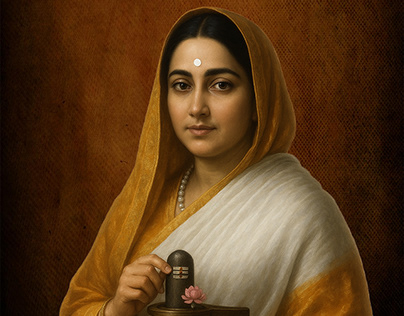
Ahilyabai Holkar governed the Holkar territories of Malwa at a moment when the Maratha political order was at its most complicated — powerful, widely extended, and increasingly strained. What distinguishes her in the record is not battlefield expansion but the steadiness of civil administration: revenue managed carefully, justice heard in person, and a sustained investment in the physical fabric that ordinary life depends on.
She was a widow at roughly twenty-nine and had lost both her father-in-law and her only son within the space of a year. From that position she took the working government of a state into her own hands and held it until her death. The buildings she endowed — temples, ghats, wells, rest-houses — were spread across the subcontinent, far beyond any territory she controlled, and a striking number of them are still standing and still in use.
Ahilyabai was born into a family of village standing rather than of princes. Her father, Mankoji Shinde, held the office of patil in Chondi — a position of local responsibility, closer to civic administration than to courtly life. That background matters. The habits of practical, local, answerable authority run visibly through the way she later governed a state.
Her marriage brought her into the household of Malhar Rao Holkar, one of the most capable commanders of the Maratha expansion into central India. Contemporary and near-contemporary accounts suggest she was drawn into the working business of the household early: correspondence, revenue matters, the administration of territory. When she came to rule, she was not improvising.
The years between 1754 and 1767 were marked by successive loss — her husband, then her father-in-law, then her son. What followed was not a retreat but an assumption of responsibility, and a long, deliberate, unusually well-documented reign.
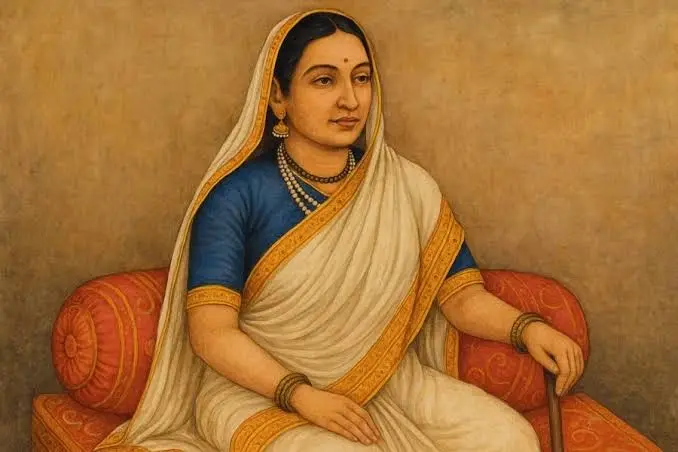
A widely reproduced painted likeness of Ahilyabai Holkar. No portrait made from life is securely identified; images of this kind are later artistic representations.
Five themes run through the whole of her administration, and each of them is documented in the physical and administrative record she left behind.
A ruler who took charge of a state in the aftermath of successive family bereavements, and held it for close to three decades through a turbulent period in Indian politics.
Accounts consistently describe a sovereign who heard petitions herself, in open court, and treated the hearing of grievances as the first duty of rule rather than a ceremonial one.
Wells and step-wells, rest-houses for travellers, food houses, roads and river crossings — public works aimed at ordinary people moving through an often difficult landscape.
A programme of temple building, repair and endowment that reached from the Himalaya to the southern peninsula, tied to the maintenance of the people who served those places.
The encouragement of craft and trade at Maheshwar, most enduringly the handloom weaving tradition that still carries the town’s name.
Seven moments that mark the arc of her life, from a village in the Deccan to a riverfront capital in Malwa. Dates given here follow the most widely accepted accounts; where sources differ, the timeline page sets out the variation.
Open the full timelineBorn on 31 May 1725 in the village of Chondi, in the Jamkhed area of present-day Ahmednagar district, Maharashtra.
Married to Khanderao Holkar, son of Malhar Rao Holkar, the soldier-administrator who had established Holkar authority in Malwa.
Khanderao Holkar was killed during the siege of Kumher in Bharatpur. Ahilyabai remained in the Holkar household, working closely with her father-in-law.
Malhar Rao Holkar died in 1766; her son Male Rao, who succeeded him, died the following year. Ahilyabai took the administration of the state into her own hands.
She established her seat at Maheshwar on the north bank of the Narmada, and it became the administrative and cultural centre of her rule.
The temple of Kashi Vishwanath at Varanasi was rebuilt under her patronage — the most widely known single work in a much larger programme.
Ahilyabai Holkar died on 13 August 1795, having governed the Holkar state for roughly twenty-eight years.
Her building programme was unusually broad: temples and their repair, but equally the undramatic infrastructure of pilgrimage and everyday movement — steps to water, shade, shelter and a place to sleep.

The works associated with her name follow a recognisable pattern. A temple is repaired or rebuilt; a ghat gives it access to the river; a well or tank secures water; a rest-house takes in travellers; and an endowment is settled to keep the whole arrangement running after the builder is gone. It is architecture understood as a public service.
Much of this construction lay well outside the territory she governed. Patronage of this kind was a recognised way for an Indian ruler to act on a subcontinental stage without armies — and it is the principal reason her name is known in places the Holkar state never administered.
See the architectural legacyHer patronage is best understood as a map rather than a list. It follows the pilgrimage routes of the subcontinent, and it reaches every direction from Malwa.
Maheshwar · Indore · Omkareshwar · Ujjain
The heartland of the Holkar state, where her capital stood and where her building and administration were most concentrated.
Varanasi · Gaya · Ayodhya · Mathura · Haridwar
Temples, ghats and rest-houses along the pilgrimage routes of the north, including the rebuilding of Kashi Vishwanath.
Somnath · Dwarka · Nashik · Trimbakeshwar
Works of repair and endowment at long-established coastal and Deccan shrines.
Badrinath · Kedarnath · Gangotri
Support for shelters and structures on some of the hardest pilgrim routes in the subcontinent.
Puri · Rameswaram · Srisailam · Kanchipuram
Endowments and construction that placed her patronage on a genuinely subcontinental scale.

The handloom tradition encouraged at Maheshwar under her patronage still carries the town’s name.
Maheshwar sits on the north bank of the Narmada, a river regarded as sacred along its entire length. Ahilyabai made it her seat, and in doing so turned a town of moderate size into the working centre of a state: a fort and palace above the water, a long sweep of ghats below, temples along the bank, and a court that met in public.
She also drew weavers to the town. The cotton-and-silk textiles produced there, with their distinctive borders, became one of the most durable parts of her legacy — a craft economy that has outlasted the state it was founded under and continues to support the town today.
Discover MaheshwarLonger, carefully written pieces on her life, her dynasty, and the heritage associated with her name.
A clear, carefully sourced introduction to her life, her position within the Maratha political order, and why she is remembered.
How a town on the Narmada became the seat of a state — its fort, its ghats, its weaving and its continuing life.
The rise of the Holkars within the Maratha confederacy, and the political world Ahilyabai inherited and governed.
Painted likenesses, commemorative sculpture and original architectural illustration, shown complete and uncropped.
Open the gallery
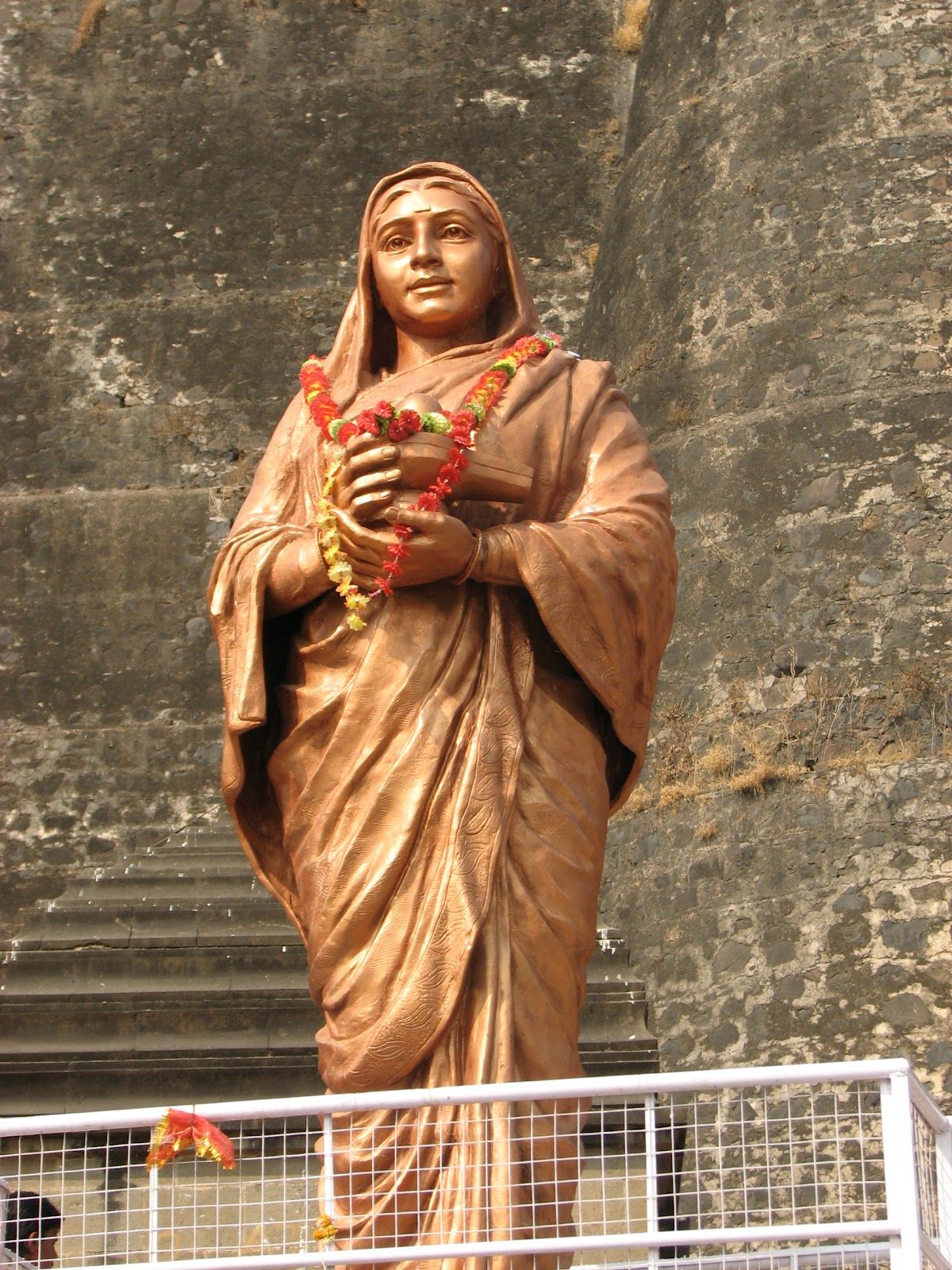
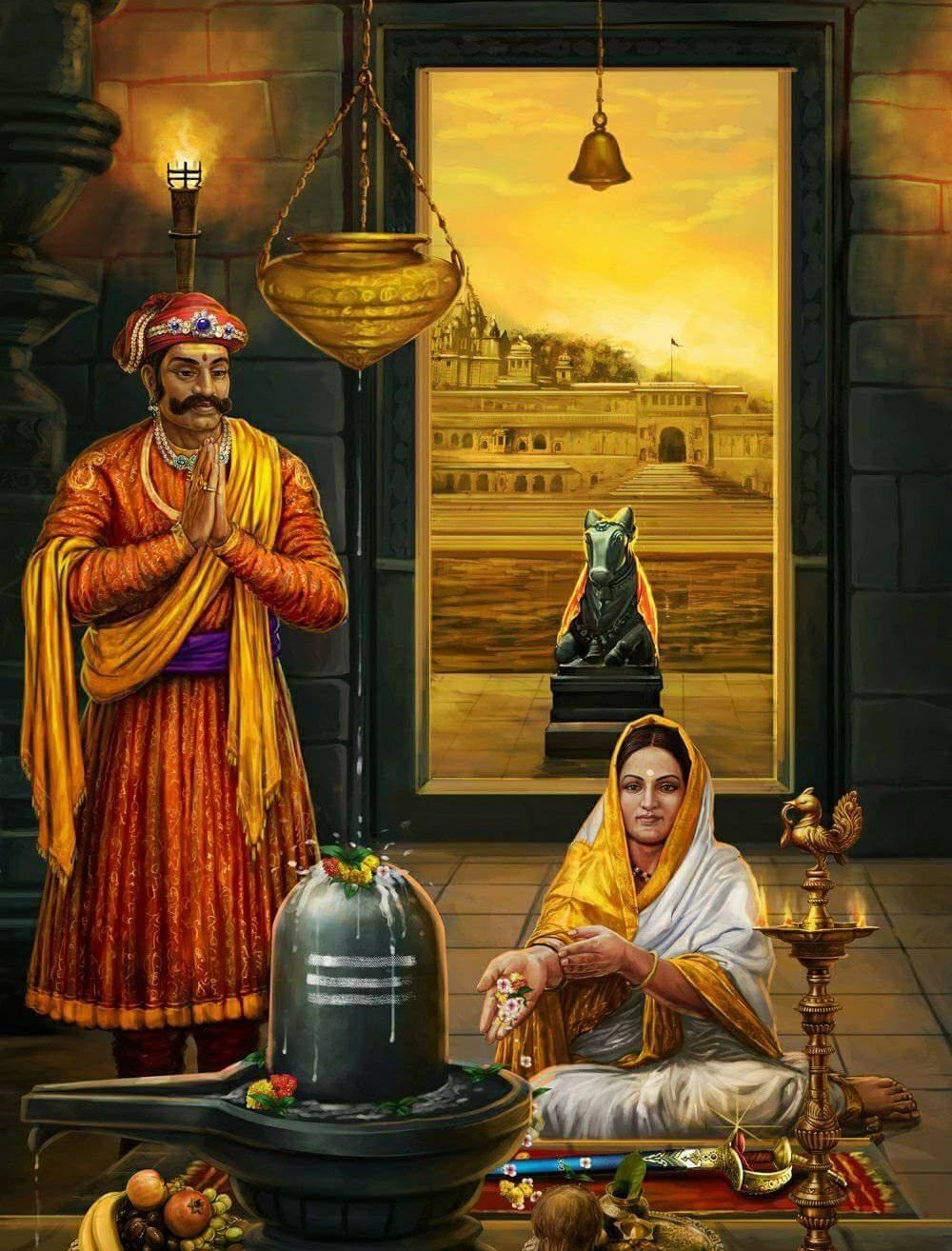

A note on sources. This site distinguishes carefully between documented history, later tradition and modern illustration. No portrait of Ahilyabai Holkar made from life is securely identified; the painted images reproduced here are later artistic representations, and the architectural scenes are original illustrations created for this website rather than photographs of specific historical buildings.